The IPO's new investors came through an app, and they held. The existing wallets traded
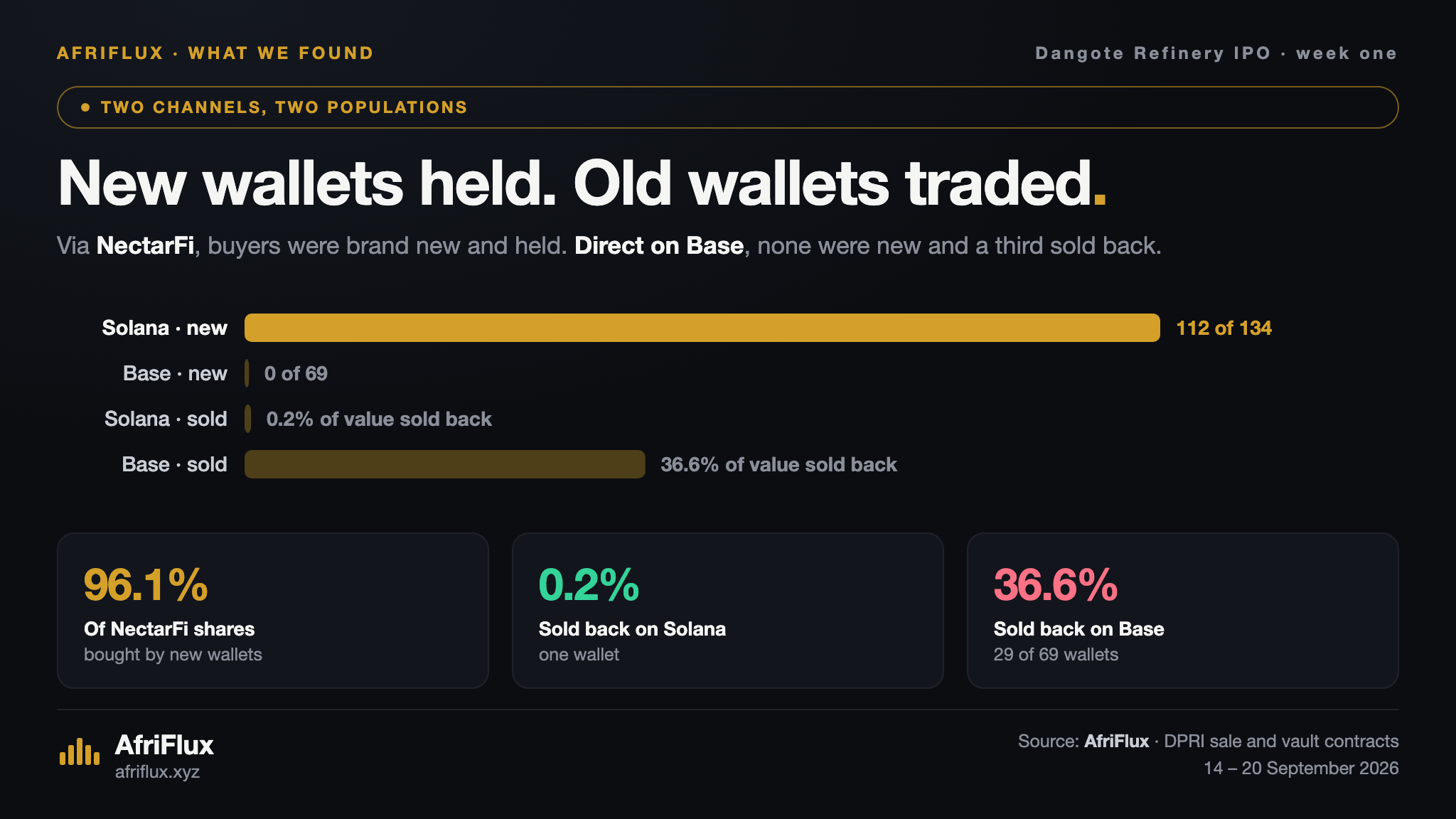
112 of the 134 wallets that bought Dangote Refinery shares through NectarFi were less than 48 hours old at their first buy, and they have sold back 0.2% of what they bought. The 69 wallets buying directly on Base were all older, and have sold back 36.6%. Same asset, same week, two different populations doing two different things.
- 112 of 134
- NectarFi buyers under 48h old
- 0.2%
- Sold back on Solana
- 36.6%
- Sold back on Base
- 0 of 69
- Base buyers under 48h old
at their first buy
one wallet
29 of 69 wallets
The tokenised Dangote Refinery IPO took ₦21.34M in its first week through two channels. They drew in different people, and those people did different things.
| NectarFi, on Solana | Direct, on Base | |
|---|---|---|
| Buying wallets | 134 | 69 |
| Under 48 hours old at first buy | 112 | 0 |
| Share of shares bought by those new wallets | 96.1% | — |
| Median per buyer | ₦37,590 | ₦13,125 |
| Sold back | 0.2% | 36.6% |
The claim
The IPO's genuinely new money came through a consumer app, and it is behaving like an investor. The wallets that were already onchain are behaving like traders.
On Solana, 112 of 134 buyers had wallets less than two days old — created, in most cases, to buy this share. They put in more per wallet and, with one exception, have not sold a share back.
On Base, every buyer had an older wallet. They bought smaller, and 29 of the 69 have already sold back — more than a third of the value bought on that chain.
What a well-informed person could say instead
That the Base sell-backs are not "trading" but a quirk of the product: the shares are transferable, a wallet can move shares it did not buy, and some Base activity may be people testing the flow with small amounts. That is fair, and the ₦13,125 median per buyer on Base supports it.
It does not change the Solana side. Brand-new wallets, created by an app, putting in ₦37,590 each and holding: that is the first sign we have seen of tokenised public equity pulling people onchain who were not there before — rather than giving existing crypto users one more asset to rotate.
What we cannot see
A wallet is not a person. One investor can open several, and a new wallet can belong to someone who has held crypto for years. We also cannot see why anyone sold back. What we can say is that the new-wallet cohort and the old-wallet cohort are behaving differently, and that the difference is large.
Method
Wallet age is the hours between the first transaction we observe for the wallet and its first DPRI buy; no wallet's history hit our lookup cap, so none is reported as new merely because we could not see further back. Sell-back share is sell-back value divided by buy value per chain, in cNGN. Channel is taken from the transaction path. Figures cover 14–20 September 2026. A wallet is not a person: one investor can use several wallets, and a new wallet can belong to someone who has held crypto before.
How attribution works →Cite this
Free to cite with attribution. No embargo, no approval needed.
AfriFlux (2026). The IPO's new investors came through an app, and they held. The existing wallets traded. Published 21 September 2026. https://www.afriflux.xyz/feed/ipo-new-wallets-held
Reproducing a chart? Use this line: Source: AfriFlux — on-chain intelligence for Africa's stablecoin economy. afriflux.xyz